Nursing Homes & Assisted Living
Medical Waste in Nursing and Assisted Living Homes
Like a hospital or clinic, nursing and assisted living homes often have a lot of medical waste because they provide medical care for the residents. Unlike the other facilities, nursing homes and assisted living centers have residents that stay for long-term.
These places for seniors come with medical staff. Even though they don’t perform all the complicated and advanced treatments as in a medical clinic or hospital, they do provide medical care, which creates biohazardous waste.
Waste generated in a nursing home or assisted living center is often not as hazardous as in medical clinics. However, it must be disposed of similar to what you would find in these other medical facilities rather than in residential buildings.
Types of Waste You Can Expect in a Nursing Home
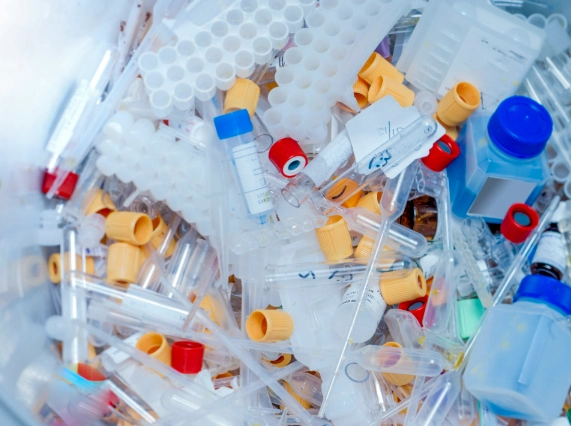
One of the most common types of waste found in a nursing home or assisted living facility is in the form of sharps. This term means needles as well as razors and other sharp objects used in treating someone. They can pierce the skin and injure someone. They also can lead to infection if the wound is not cared for properly or if the sharp was contaminated. Sharps must be disposed of in a container that is designed specifically for this type of waste. It will be tough enough not to puncture.
Patients often take chemotherapy medication as part of a treatment plan. Nursing and assisted living centers may need to dispose of the medication that isn’t used. Radiation is another type of treatment for patients, which can produce hazardous waste in urine and feces. You will need to know how to dispose of this type of waste properly and safely.
Hazardous waste can be classified as toxic or flammable. It may also be corrosive or react with other chemicals. While you won’t have much, you will need to store it in the proper container until it can be picked up by a waste management company.
Biohazardous Waste
This type of waste is infectious and can spread disease from one person to another. It often comes from bodily fluids and secretions, and you may not always know which person is infectious. Proper disposal includes considering all biological waste to be biohazardous. Staff should wear gloves and other appropriate attire when handling this type of waste. They should be trained in universal precautions.
Even something as simple as removing a band-aid is considered biohazardous waste. You must train staff to know how to handle anything that touches bodily fluids until it can be disposed of in accordance with industry regulations.

How Medical Waste is Disposed Of
There are mainly four ways that medical waste can be disposed of. Incineration was once the only method used, and it is still used in some situations. However, tighter regulations have led to other methods being the prime options.
Autoclaving is a sterilization method that turns hazardous medical waste into non-hazardous. Once it has gone through the process, medical waste may be disposed of normally.
Microwaving works similar to autoclaving but with a different method. The result is the same in that the waste can be disposed of normally. Chemical treatment is often used on chemical waste to render it harmless.
Managers in a healthcare professional office have the responsibility to know the laws on healthcare waste and to ensure it is classified correctly. The waste must be separated by type and put into the correct waste containers. These containers must be prepared correctly, using the requirements of the regulators. Proper documentation is also critical to follow the trail of the medical waste.
Managers also have the job of finding the right waste disposal company. A medical waste company like All Florida Medical Waste is a safe choice because the team knows the requirements for transporting and disposing of specific types of medical waste.
If you want to know more about how to have your medical waste disposed of correctly or need a reliable, experienced handler of medical waste, contact All Florida Medical Waste for pricing or answers to your questions.