Pharmaceutical Waste
Pharmaceutical Waste Compliance
In the late 1950s through the 1960s, the public became increasingly concerned with the impact the human race had on the environment around them, ultimately raising the concerns of Congress. This led to Senator James E. Murray introducing the Resources and Conservation Act to Congress, which in effect, led to similar bills to be introduced and opening the eyes of Congress further.
This continued for about a decade, until President Richard Nixon proposed the many environmental responsibilities be reorganized under one group: The Environment Protection Agency.
This reorganized agency was now meant to overlook; air pollution, chemical and toxic wastes, pharmaceutical waste, solid waste management, radiological health, and many other topics concerning public and environmental health.
After the reorganization of the EPA, its former 84 sites and laboratories, have now been condensed to only 27, being located all over the country from Warrenton, Virginia to Gulf Breeze, Florida.
EPA’s Final Rule
- Pharmacies
- Hospitals
- Nursing Facilities
- Dentistry
- Reverse Distributors
- Long-Term Care Facilities
Although, pharmaceutical manufacturers are not affected by the final rule, unless they operate as a reverse distributor.
Ultimately, this rule is supposed to be more cost efficient for health care facilities, without disrupting routine business operations, all while protecting human and environmental health. Prohibiting hazardous pharmaceuticals from being flushed, or “sewered”, will also increase the amount of clean water by 1,644 to 2,300 tons annually.
Finally, the final act has made changes regarding nicotine waste. When it comes to FDA-approved, over-the-counter, therapies (patches, gums and lozenges), they are no longer considered to be “hazard waste”. With this change to the nicotine waste management, facilities can expect outstanding cost savings while lessening the burden of waste management.
Changes Regarding the Disposal of Containers Hazardous Waste
- The disposal of containers of hazardous waste have changed, and gotten new rules are each:
- Dispensing, stock and unit dose containers- dispensing bottles, vials, blister packs. When these items are considered empty, they are no longer regarded as hazardous waste.
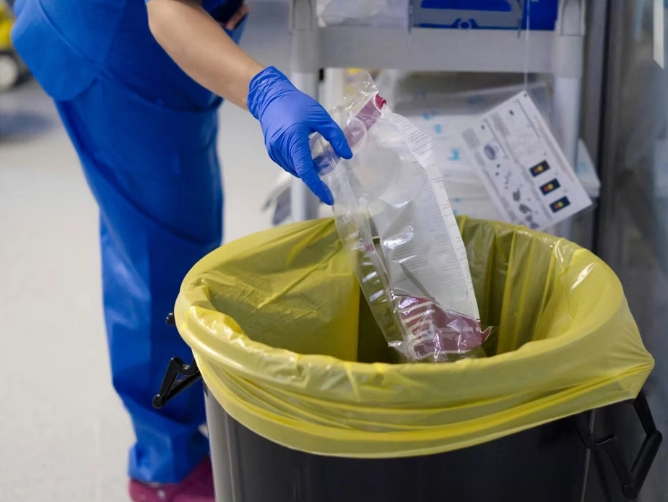
- IV bags-entirely used IV bags are considered empty and meet the current RCRA definition of empty.
- Syringes- are not considered hazardous pharmaceuticals once the syringe plunger has been fully decompressed. Empty syringes should meet federal, state, and local requirements when being managed.
- Other containers- these include but are not limited to: gels, creams, nebulizers, and inhalers. When these containers are empty, they have to meet the current RCRA definition of empty.
There are four types hazardous drugs that can be classified, to determine how each drug is handled. For example, if a drug reacts with other chemicals and can cause fumes when this happens, then the drug is classified as reactive. The drug would then go into a category such as; P-list waste, U-list waste, and characteristic hazardous waste. From there on, the hazardous pharmaceutical drug would then be properly disposed of by companies like All Florida Medical Waste.
All Florida Medical Waste helps with the removal of hazardous waste with their on-time pick up in many like counties through central Florida from Seminole, Osceola, to Orange!